The Power of Dopamine: Insights of Anna Lembke and Spiritual Perspectives

 Images of this article generated with AI
This article began with a simple question that arose while listening to a neuroscience discussion: could the remarkable human drive to seek be only a biological adaptation, or might it also reflect something deeper about who we are?
Unveiling the Power of Dopamine with Anna Lembke and Exploring Divine Perspectives on Human Purpose and Eternal Life
In an era dominated by digital distractions, addictive substances, and compulsive behaviors, understanding the chemistry of the human brain has become more important than ever. At the forefront of this discussion stands Dr. Anna Lembke, a renowned psychiatrist, Stanford professor, and one of the leading experts on dopamine, addiction, and the relationship between pleasure and pain.
Her insights, particularly those shared during her conversation with Steven Bartlett on The Diary of a CEO podcast, provide a fascinating look into how dopamine influences our motivation, decisions, habits, and overall well-being.

This article first explores the scientific insights presented by Dr. Lembke, especially the role dopamine plays in motivation, addiction, and maintaining balance within the brain. It then moves into a deeper philosophical and spiritual reflection inspired by these discoveries:
Could our dopamine system, with its powerful drive to seek, represent not only a biological mechanism for survival but also a reflection of a deeper purpose woven into human nature?
The neurobiological mechanisms described by neuroscience do not, by themselves, prove or disprove the existence of God. Neuroscience describes how the human brain functions; it does not determine the ultimate meaning behind those mechanisms.
The reflections that follow are therefore not presented as scientific conclusions. Rather, they explore a possible interpretation: if humanity was intentionally created, these same biological systems may also be understood as part of that intentional design.
The Fundamental Role of Dopamine in Survival and Pleasure
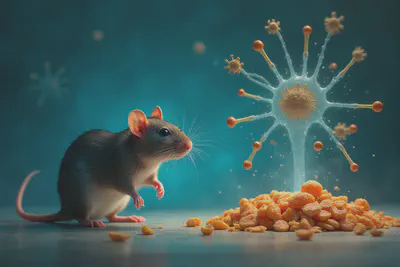
Consider a classic scientific experiment involving rats. Researchers studied animals whose brains lacked dopamine and discovered something remarkable: when food was placed directly into their mouths, they could eat. However, when food was placed only a short distance away, they would not move toward it and could eventually starve.
This experiment reveals something profound about dopamine.
Dopamine is not simply a chemical of pleasure. More fundamentally, it is involved in motivation, anticipation, learning, and the drive to pursue what is necessary for survival.
Dr. Anna Lembke explains that dopamine is a chemical messenger produced in the brain that plays a central role in the reward system. However, dopamine is often misunderstood. It is not simply the pleasure itself; rather, it is deeply connected to the desire to seek, pursue, and obtain something.
Without this motivational system, survival becomes extremely difficult.
The brain is not merely designed to experience rewards.
It is designed to pursue them.
The Dual Nature of Pleasure and Pain in the Brain
One of the most fascinating discoveries in neuroscience is that the same brain systems involved in pleasure are also connected with pain. The brain constantly attempts to maintain balance - a state known as homeostasis.
When we experience something pleasurable, dopamine is released. However, the brain responds by attempting to restore equilibrium. Through repeated exposure to intense stimulation, the brain can adapt by reducing its sensitivity to that stimulus, creating tolerance.
As a result, the same experience that once brought pleasure may eventually require greater intensity to achieve the same effect.
Dr. Lembke describes this process through the analogy of a balance scale. When we repeatedly push heavily on the pleasure side, the brain compensates by pushing toward the pain side in an attempt to restore balance.
This mechanism is not a flaw in the brain.
It is a protective adaptation.
However, modern society has introduced levels of stimulation that are very different from those our brains historically encountered. Digital technology, addictive substances, and instant access to rewards can overwhelm a system designed for a slower rhythm of effort and reward.
Dr. Lembke illustrates this through her own experience of becoming addicted to romance novels. Her example demonstrates that even behaviors that appear harmless can influence the brain’s reward pathways. Her recovery involved intentionally reducing exposure and allowing her brain to regain balance.
The Mechanics of Dopamine: How Modern Life Affects the Brain

Everyday experiences -eating, social interaction, exercise, work, entertainment, and sex- influence dopamine activity.
Dopamine helps the brain identify what matters and motivates us to pursue important goals.
However, modern technology has created unprecedented opportunities for rapid stimulation. Social media platforms, online entertainment, gambling systems, and certain substances can activate reward pathways in ways that are far more intense and immediate than many natural rewards.
Dr. Lembke explains that dopamine responses vary between individuals. What becomes highly reinforcing for one person may not have the same effect on another. This is sometimes described as a person’s “drug of choice” - the specific substance or behavior that strongly activates their reward system.
For one person, it may be alcohol.
For another, gambling, social media, shopping, pornography, work, or another behavior.
The principle remains the same: the brain learns what we repeatedly value and begins to seek it again.
Dr. Lembke explains that the human reward system developed in an environment where rewards required effort. Our ancestors had to search, work, hunt, build, and endure difficulty before receiving rewards.
Modern life can create a mismatch.
Today, a person can receive intense stimulation instantly through a screen, a click, or a swipe. The brain’s ancient motivational systems are being exposed to levels of accessibility and intensity they were not originally adapted for.
The Balance of Pleasure and Pain: Why the Brain Overshoots
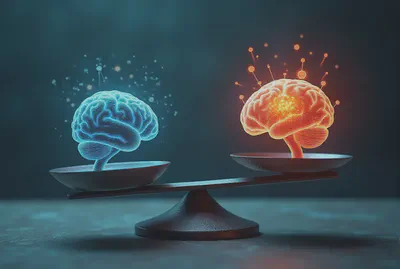
When we engage in pleasurable activities, the brain releases dopamine and creates a sense of reward. However, it also activates a counter-response designed to restore balance.
This explains why excessive pleasure can eventually lead to discomfort.
The brain does not always return immediately to a neutral state. Instead, it can temporarily overshoot in the opposite direction.
This is why excessive alcohol consumption can lead to a hangover, or why repeated exposure to highly stimulating behaviors can create anxiety, irritability, emptiness, and craving.
During her conversation with Steven Bartlett, Dr. Lembke was asked why the brain overshoots instead of simply returning perfectly to balance.
Her explanation was fascinating.
From an evolutionary perspective, she suggested that this mechanism may have helped humans survive in environments where resources were scarce. A system that encouraged continued seeking would motivate individuals to keep searching for food, shelter, and other necessities.
In this sense, the mechanism helped make humans persistent seekers.
However, reflecting on this explanation raises a deeper question:
Why does human seeking extend so far beyond survival?
Humans do not only seek food, safety, and reproduction.
We seek truth.
We seek beauty.
We seek justice.
We seek meaning.
We seek answers about our existence.
This is where a scientific observation opens the door to a philosophical question:
Science can describe the mechanism of seeking. But why humans are beings who seek meaning beyond survival is a deeper question.
Addiction as a Disruption of Balance
Repeated exposure to highly stimulating substances or behaviors can gradually shift the brain’s pleasure-pain balance.
The brain adapts to repeated stimulation by changing its sensitivity. As dopamine signaling becomes less responsive, ordinary experiences may feel less rewarding, creating a cycle in which a person seeks more of the same stimulus just to feel normal.
Dr. Lembke describes these adaptations as the brain’s attempt to restore equilibrium. However, this protective mechanism can become part of the problem when modern sources of stimulation overwhelm the system.
When the brain is repeatedly pushed toward intense pleasure, it may compensate by increasing discomfort on the other side of the scale.
This can result in withdrawal symptoms such as anxiety, low mood, irritability, insomnia, and strong cravings.
Understanding this process creates a more compassionate view of addiction. Addiction is not simply a matter of weak character or poor decisions. It involves powerful biological processes that influence motivation, reward, and behavior.
At the same time, recognizing the biological nature of addiction does not remove personal responsibility. Rather, it allows us to approach addiction with greater understanding while supporting recovery through healthy choices, treatment, community, and resilience.
The Vicious Cycle: Stress, Relapse, and Recovery
Stress is one of the most powerful triggers for relapse.
Research involving animals has shown that after addiction has developed, exposure to stress can reactivate the desire to seek the addictive substance or behavior. This demonstrates how deeply connected stress, emotion, and reward systems are within the brain.
Dr. Lembke highlights common human stressors through the acronym HALT:
Hungry. Angry. Lonely. Tired.
These ordinary states can increase vulnerability because they affect our emotional balance and decision-making.
Recovery therefore involves more than simply avoiding a harmful substance or behavior. It involves rebuilding a healthier relationship with discomfort, stress, reward, and meaning.
Practices such as exercise, meaningful work, healthy relationships, mindfulness, and intentional challenges can help restore balance and strengthen resilience.
The goal is not to eliminate the human desire to seek.
The goal is to direct that desire toward things that genuinely contribute to a healthy and meaningful life.
Empathy and Understanding Addiction
One of the most valuable lessons from Dr. Lembke’s work is the importance of compassion toward those struggling with addiction.
Understanding the brain mechanisms involved in addiction helps us recognize that people are often caught in powerful cycles involving biology, environment, emotional pain, and learned behavior.
Addiction can affect people from every background.
It can emerge through substances, behaviors, or forms of stimulation that gradually reshape the brain’s reward system.
This understanding does not mean that change is impossible. On the contrary, understanding the mechanisms involved can provide a pathway toward recovery.
When we understand the brain, we can better understand ourselves.
And when we better understand ourselves, we can make wiser choices about what we pursue.
Practical Strategies for Rebalancing Dopamine
Dr. Lembke offers several practical approaches for restoring balance within the reward system.
Dopamine Fasting
Temporarily reducing exposure to highly stimulating activities can help the brain regain sensitivity and restore balance.
Movement and Exercise
Physical activity provides a natural and sustainable way to support dopamine regulation while improving physical and mental health.
Mindfulness and Presence
Learning to remain present reduces the constant search for external stimulation and helps develop greater emotional stability.
Managing Stress
Recognizing personal triggers and addressing states such as hunger, anger, loneliness, and exhaustion can reduce vulnerability to unhealthy patterns.
Professional Support
Severe addictions require appropriate medical and psychological care. Certain substances, including alcohol and some medications, can involve dangerous withdrawal processes and should not be stopped without professional guidance.
Moving From Mechanism Toward Meaning
At this point, the scientific discussion raises a question that goes beyond neuroscience.
Dr. Lembke describes dopamine as part of a system that makes humans “ultimate seekers.” From an evolutionary perspective, this seeking capacity can be understood as an adaptation that helped humans survive in challenging environments.
This explanation addresses an important question:
How does the dopamine system work?
But another question remains:
Why do humans possess such an extraordinary drive to seek?
Why are humans not satisfied only with survival?
Why do we search for meaning, truth, purpose, beauty, justice, and answers about existence?
These questions move from biology into philosophy.
And this is where my own reflection begins.
A Possible Deeper Dimension: The Neurobiology of Seeking

The observation that dopamine creates a powerful drive to seek led me to consider a deeper possibility.
What if this remarkable biological system is not only a mechanism that helped humanity survive, but also part of a greater purpose?
What if our ability to seek reflects something intentional about human nature?
This is not presented as a scientific proof of divine design. Science can describe the mechanisms involved in motivation and reward, but it cannot by itself determine whether those mechanisms have a spiritual purpose.
Rather, this is a philosophical and theological interpretation:
If humanity was intentionally created, could the human drive to seek also be understood as part of that intentional design?
From this perspective, dopamine may represent more than a survival mechanism. It may be one part of the remarkable biological foundation that allows humans to pursue knowledge, relationships, creativity, meaning, and ultimately spiritual questions.
The question is not whether dopamine proves God.
It does not.
The deeper question is whether the existence of such a powerful and far-reaching capacity for seeking is consistent with the idea that humans were created with a purpose.
A Possible Divine Perspective: The Neurobiology of Seeking as a Reflection of Purpose
As an avid Bible student and someone deeply interested in the relationship between creation, evolution, science, and human purpose, I have found this connection between neuroscience and spirituality fascinating.
The idea that dopamine contributes to making humans “ultimate seekers” stood out to me because it reveals something remarkable about human nature.
Humans do not simply seek what is necessary for survival.
We seek understanding.
We seek meaning.
We seek purpose.
We seek connection.
We seek answers to questions that reach beyond our immediate physical existence.
The scientific explanation for this seeking capacity is complex and fascinating. Neuroscience describes the mechanisms involved: dopamine pathways, reward systems, motivation, learning, and adaptation.
But the existence of such a powerful capacity for seeking also raises a philosophical question:
Why are humans beings who seek not only what they need to survive, but also what gives life meaning?
This question does not have a scientific answer alone.
It moves into the realm of philosophy and theology.
Three Complementary Perspectives
The relationship between science and spirituality can be understood through three complementary levels.
Scientific Observation
Neuroscience describes dopamine as a biological system involved in motivation, anticipation, learning, and goal-directed behavior.
It explains how the system functions.
Philosophical Interpretation
The existence of such a powerful seeking mechanism raises deeper questions:
Why do humans pursue truth?
Why do we search for meaning?
Why do we long for something beyond immediate pleasure and survival?
Philosophy explores what these observations might mean.
Biblical Worldview
The Bible offers one possible answer: that humans were intentionally created with a capacity to seek God, understand purpose, and long for something beyond temporary existence.
From this perspective, the human drive to seek may be understood as part of the nature God gave humanity.
These perspectives do not necessarily compete.
Science explains the mechanism.
Philosophy explores the significance.
Faith provides an interpretation of ultimate purpose.
A Possible Divine Blueprint
From a biblical perspective, the human ability to seek may reflect intentional design.
The dopamine system itself is not a “spiritual proof” or a direct measurement of God’s existence. Rather, it is a biological capacity that allows humans to pursue goals, form relationships, learn, create, and explore.
If humanity was created with purpose, then this capacity for seeking may be understood as part of that purpose.
The same motivational system that helps us search for food, develop skills, build relationships, and overcome challenges may also enable us to search for deeper realities:
- truth
- wisdom
- spiritual understanding
- connection with God
- the hope of a meaningful future
In this interpretation, dopamine is not directing humans toward God by itself.
Rather, it provides part of the biological foundation that makes seeking possible.
The question becomes:
Could a brain designed to seek reflect a Creator who desires humanity to seek?
The Human Longing for More
One of the most striking characteristics of human beings is that we often desire more than what the physical world immediately provides.
We can achieve success and still ask:
“Is there more?”
We can gain knowledge and still ask:
“What is the ultimate truth?”
We can experience pleasure and still ask:
“What gives life lasting meaning?”
These questions appear across cultures and throughout human history.
The human search for meaning seems to be deeply embedded within us.
From a biblical perspective, this may be connected to the idea that humans were created not merely as biological organisms, but as beings capable of relationship with God.
Our desire to seek may therefore be understood not as an endless dissatisfaction, but as an orientation toward something greater.
Ecclesiastes: Eternity Within the Human Heart
This idea is beautifully expressed in Ecclesiastes 3:10,11:
I have seen the occupation that God has given to the sons of men to keep them occupied. He has made everything beautiful in its time. He has even put eternity in their heart; yet mankind will never find out the work that the true God has made from start to finish.
This verse captures two profound ideas.
First, it suggests that humans possess an innate awareness of something beyond the present moment - a longing for eternity, permanence, and ultimate meaning.
Second, it acknowledges human limitations.
Interestingly, the same passage that speaks of eternity being placed within the human heart also reminds us that humans cannot fully comprehend all of God’s works from beginning to end.
This creates a beautiful balance:
We are created to seek.
But we are also called to remain humble.
We are encouraged to explore.
But we recognize that our understanding is incomplete.
This balance between curiosity and humility is found both in scientific discovery and in spiritual reflection.
Linking Science to Spiritual Goals
If our capacity for seeking reflects intentional design, then this perspective changes how we understand human motivation.
The goal is not to reject biology.
The goal is to understand it more deeply.
Our biological drives can be directed toward many things. The same reward system that can become trapped in addiction can also support creativity, generosity, learning, compassion, and spiritual growth.
From a biblical perspective, the challenge is not to eliminate our desire to seek.
The challenge is to seek what truly fulfills.
Temporary pleasures may provide moments of satisfaction, but the deeper human longing for meaning and connection appears to reach further.
Perhaps this is why humans continue searching.
Perhaps the capacity to seek itself is part of the invitation.
Practical Implications: Living in Alignment With Our Design

If the human capacity for seeking reflects both biological mechanisms and spiritual significance, then this perspective has practical implications for how we approach life.
Understanding dopamine can help us recognize that our desires are powerful, but they also need direction.
A brain designed to seek can pursue many things. It can seek temporary pleasure, endless stimulation, recognition, or material success. Yet these pursuits often fail to satisfy the deeper human longing for meaning and purpose.
The goal is not to suppress our desire to seek.
The goal is to guide it wisely.
Healthy dopamine regulation involves many practices that have long been recognized as beneficial:
- meaningful relationships
- physical activity
- personal discipline
- service to others
- learning and creativity
- gratitude and reflection
- spiritual practices
These activities do not simply provide healthier forms of stimulation. They also connect with some of the deepest aspects of human flourishing.
From a biblical perspective, these practices may be understood as ways of living in harmony with the nature God gave humanity.
The Direction of Our Seeking
The dopamine system gives humans the capacity to pursue.
But the direction of our pursuit matters.
The same motivational system that can become trapped in addiction can also be directed toward growth, wisdom, compassion, and spiritual development.
The question is not whether humans will seek.
Humans are seekers by nature.
The deeper question is:
What will we seek?
Throughout history, people have searched for happiness, success, knowledge, and fulfillment. Yet even when these things are achieved, many continue to experience a desire for something deeper.
From a biblical perspective, this may be because humans were created with a longing that cannot be fully satisfied by temporary things.
The desire for meaning, connection, and eternity may point beyond ourselves.
Science, Philosophy, and Faith: Three Ways of Looking at Human Seeking
The reflections in this article can be summarized through three different but complementary perspectives.
Science asks:
How does the dopamine system work?
Neuroscience provides insights into motivation, reward, learning, and behavior.
Philosophy asks:
Why do humans possess such an extraordinary drive to seek meaning?
It explores questions about consciousness, purpose, and human nature.
Faith asks:
Could this capacity for seeking reflect an intentional purpose?
Within a biblical worldview, the answer may be yes: humans were created with the ability and desire to seek a relationship with their Creator.
These questions operate at different levels.
Scientific explanations describe mechanisms.
They do not necessarily answer questions about ultimate meaning.
The Promise of Restoration
The Bible presents a vision in which humanity’s deepest longings are ultimately fulfilled through restoration and a renewed relationship with God.
Revelation 21:3,4 describes a future in which God is with humanity, suffering is removed, and death is no more.
This vision speaks directly to some of humanity’s deepest hopes:
- the desire for lasting life
- freedom from suffering
- meaningful connection
- the hope that existence has ultimate purpose
From a biblical perspective, these hopes are not merely psychological wishes. They reflect humanity’s original purpose and the possibility of a restored relationship with God.
At the same time, this interpretation remains a matter of faith.
The biological mechanisms revealed by neuroscience do not prove this hope scientifically.
Rather, they provide a fascinating context in which believers may reflect on the possibility that human nature itself contains signs of a greater purpose.
Final Thoughts
Dr. Anna Lembke’s work on dopamine and addiction provides valuable insight into the human brain and the challenges of modern life.
Her research helps us understand why we seek, why we become vulnerable to addiction, and how we can restore balance.
But it also invites a deeper question:
Why are humans beings who seek at all?
Why do we search not only for survival, but for meaning?
Why do we ask questions about eternity, purpose, truth, and our place in existence?
Neuroscience reveals the mechanism of seeking.
It shows us the biological foundation that allows humans to pursue goals, form relationships, and learn from experience.
But the meaning of that seeking remains a deeper question.
From a biblical perspective, the human capacity to seek may itself be viewed as a gift - a reflection of God’s desire that humanity continue searching for wisdom, truth, purpose, and ultimately for Him.
Perhaps the greatest mystery is not only that humans seek.
Perhaps the deeper mystery is that we were created with the ability and desire to seek something greater than ourselves.
Spiritual Aspect Summary
The exploration of dopamine, human motivation, and spiritual longing leads to several reflections:
1. Dopamine reveals humanity’s remarkable capacity to seek.
Neuroscience shows that dopamine plays a central role in motivation, anticipation, learning, and goal-directed behavior.
2. Human seeking extends beyond survival.
Humans seek not only physical necessities but also truth, beauty, justice, meaning, and answers about existence.
3. A biblical worldview provides one possible interpretation.
The Bible describes humans as having a unique relationship with God and speaks of eternity being placed within the human heart.
4. Understanding biology can help us live wisely.
Recognizing how our reward systems work can help us avoid destructive patterns and direct our desires toward meaningful goals.
5. Science and faith can address different questions.
Science explores how our biology works.
Faith explores questions of ultimate meaning and purpose.
Together, they can encourage both curiosity and humility.
Acknowledgments and Disclaimer
This reflection was inspired by Dr. Anna Lembke’s discussion of dopamine, addiction, and human behavior, particularly her conversation with Steven Bartlett on The Diary of a CEO podcast.
The scientific explanations in this article are intended to summarize established concepts regarding dopamine, motivation, addiction, and brain function.
The spiritual reflections are interpretive in nature. They are not presented as scientific proof of God’s existence or as a replacement for scientific understanding.
Rather, they explore a philosophical and theological possibility: that the biological systems discovered through neuroscience may also be understood, within a biblical worldview, as part of an intentional and meaningful design.
Readers are encouraged to engage thoughtfully with both scientific research and spiritual teachings, recognizing the importance of humility, curiosity, and continued learning.
Closing Reflection
The human brain is one of the most remarkable aspects of existence - not only because of its complexity, but because it allows us to ask questions about meaning, purpose, and our own origin.
Through neuroscience, we learn how we seek.
Through philosophy, we explore why seeking matters.
Through faith, we consider whether our deepest longings point toward something beyond ourselves.
The dopamine system may be understood as an extraordinary biological mechanism.
And from a biblical perspective, it may also be understood as part of a greater design - a capacity that enables humanity to search for knowledge, love, wisdom, purpose, and ultimately for God.
The question may not only be:
Why do humans seek?
Perhaps the deeper question is:
What were we created to seek?